To report cancelled/forgiven debt of $600 or more, you should use Form 1099-C. You must either report the cancelled debt as other income on Schedule 1 (Form 1040) or file Form 982 to claim an exclusion if you qualify for exceptions like bankruptcy, insolvency, or qualified principal residence debt forgiveness. Properly documenting your eligibility for exclusions and completing the required forms ensures you pay taxes only on cancelled debt when legally required.
Quick summary
- Form 1099-C reports cancellation of debt (often from credit card debt forgiveness, loan settlements, foreclosures, or loan modifications). If the cancelled debt is taxable, it can increase your taxable income.
- Major exceptions exist for bankruptcy, insolvency, qualified principal residence debt, and certain student loan forgiveness programs that may exclude cancelled debt from taxation.
- You must report Form 1099-C by filing Form 982 with your tax return if you qualify for an exclusion, or include the cancelled debt amount as other income on Schedule 1.
- pdfFiller makes it easy to complete, organize, store, and share your 1099-C with recipients.
What is a Form 1099-C used for?
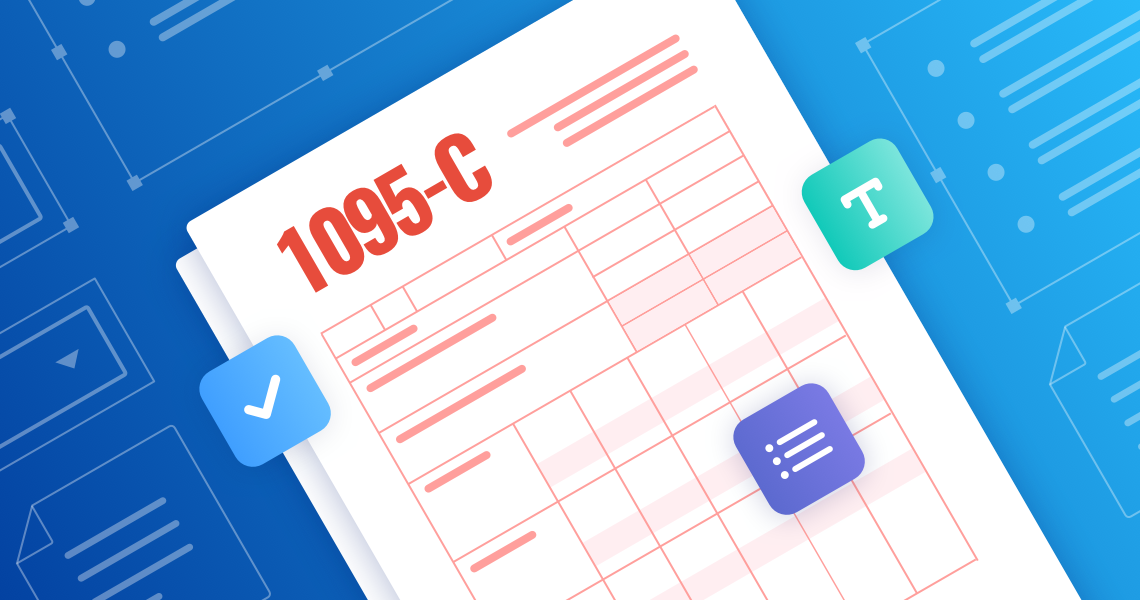
Form 1099-C, officially titled “Cancellation of Debt,” is an IRS information return that creditors must send to borrowers when they cancel or forgive $600 or more of debt. Financial institutions, credit card companies, mortgage lenders, and other creditors use this form to report debt forgiveness to both the debtor and the Internal Revenue Service. Receiving a 1099-C means the IRS considers your forgiven debt as potential taxable income, requiring you to either report it on your tax return or prove you qualify for an exclusion.
If you’re the debtor, Form 1099-C is a key tax form you use to determine whether the cancelled amount becomes 1099-C taxable income or qualifies for an exclusion.
Form 1099-C is one of many 1099 forms used to report income. For more information on the different versions of Form 1099 and their uses, check out our complete guide to Form 1099 and its types.
What is a Form 1099-C used for?
Form 1099-C tells the IRS that a creditor reported a cancellation of debt event for an amount you owed. When a creditor forgives or discharges a portion of a debt you’re personally liable for, the IRS generally considers the unpaid amount as canceled debt. This canceled debt is often treated as taxable income, which is why it’s sometimes called a “debt forgiveness tax.” Essentially, the forgiven amount could increase your taxable income for the year, unless you qualify for a 1099-C exception.
Important boxes to check on the form
- The creditor’s reported date of the identifiable event (Box 1).
- The amount of debt canceled (Box 2): This covers the principal and may include any fees or penalties.
- The interest included (Box 3): This is only taxable if the interest would have been deductible when paid. For most personal debt, like credit cards, it is usually not taxable.
- The identifiable event code (Box 6): The box indicates the reason for the cancellation, such as discharges in bankruptcy, agreement, or foreclosure election.
- The fair market value of the property (Box 7): This applies when property is involved in the debt cancellation, such as in a foreclosure or repossession.
Do you have to pay taxes on a cancellation of debt?
Generally, yes—but not always. According to the IRS, if a debt you are personally responsible for is forgiven or settled for less than the total amount owed, the remaining unpaid balance is typically considered canceled debt. In most cases, this canceled debt must be reported as taxable income unless you qualify for an exception or exclusion.
So the honest answer to “do I have to pay taxes on 1099-c cancelled debt?” is: you pay tax only on the portion that is taxable income after applying 1099-c exceptions and exclusions.
Update for the 2025 tax year and recent student loan forgiveness rules
Under the American Rescue Plan Act, most student loan forgiveness granted between 2021 and 2025 is federally tax-free. For the 2025 tax year (returns filed in 2026), specific rules regarding student loans remain in effect.
If you received student loan forgiveness during this period, you generally won’t owe federal income tax on the canceled amount, even if you get a Form 1099-C. However, some states might still tax it, so it’s important to check your state’s laws.
Publication 4681 notes that after December 31, 2025, if your student loan is discharged due to death or total and permanent disability, it may still be excluded from income, but additional rules apply (including an SSN requirement in the publication’s discussion).
What is 1099-C taxable income?
To answer this question, let’s look at this example. You owe $10,000 on a credit card and settle the debt for $4,000, while the remaining $6,000 is forgiven. The credit card company will send you a Form 1099-C listing $6,000 in Box 2. You must report this amount on your tax return as “Other Income” unless you qualify for an exclusion.
This concept often surprises taxpayers. Although you didn’t receive cash, you benefited by not having to repay money you owed. The IRS taxes this economic benefit.
When is canceled debt not taxable?
Not all debt cancellation results in a tax bill. The IRS provides several specific exclusions. If your situation fits one of these categories, you can use Form 982 (Reduction of Tax Attributes) to tell the IRS why you aren’t including the 1099-C amount as income.
Common exceptions and exclusions
- Bankruptcy: Debts discharged through a Title 11 bankruptcy case are not taxable.
- Insolvency: If your liabilities were greater than the value of your assets just before the debt was cancelled, you can exclude the amount from your income up to the total of your insolvency.
- Qualified Farm Indebtedness: This applies to debts incurred directly from operating a farm.
- Qualified Real Property Business Indebtedness: Includes certain business-related real estate debts.
- Student Loan Forgiveness: Loans forgiven through programs like Public Service Loan Forgiveness (PSLF) are generally tax-free.
Insolvency exception: How to prove you don’t owe taxes on Form 1099-C
The insolvency exception is a valuable tool for avoiding taxes on canceled debt. You may exclude canceled debt from your taxable income, but only up to the amount by which you were insolvent immediately before the debt was canceled. Insolvency generally occurs when your total liabilities exceed the fair market value of your total assets at the time of the debt cancellation.
Insolvency calculations
To prove insolvency, you must list all your debts (including the one just cancelled) and all your assets (house, car, bank accounts, retirement funds) as they stood immediately before the cancellation.
- Calculate total liabilities: Add up everything you owed. This includes mortgages, car loans, credit cards, and student loans.
- Calculate the fair market value of assets: Determine the value of everything you own.
- Compare: Subtract your Total Assets from your Total Liabilities.
If the result is positive (Liabilities > Assets), you were insolvent by that amount. You can exclude the cancelled debt from your income up to the amount of your insolvency.
How to prove insolvency
The IRS expects you to support your numbers. Ensure keeping the following records:
- bank statements and cash balances
- retirement and brokerage statements
- vehicle valuations (a reasonable, fair market estimate)
- mortgage statements and other loan balances
- credit card statements
- any collection notices or payoff letters
What happens if you don’t report 1099C?
Ignoring a Form 1099-C is a risky move. The IRS receives a copy of the same form you do. Their automated system matches the income reported by third parties (like lenders) against the income you report on your tax return.
That can lead to:
- a notice requesting clarification,
- additional tax, interest, and potential penalties, and
- time spent proving what happened (especially if the form amount was wrong or only partly yours, such as joint debt).
If you receive a 1099-C for a debt you don’t owe, such as in a case of identity theft, contact the lender immediately and keep a record of all your communications. The IRS provides specific instructions for handling fraudulent debt.
Mortgage forgiveness and foreclosure
Foreclosure and mortgage debt forgiveness trigger Form 1099-C issuance and create complex tax situations. When a lender forecloses on property, they typically cancel any remaining debt after selling the property. If you were personally liable for the mortgage (not a non-recourse loan), the cancelled portion may be taxable income unless you qualify for an exclusion.
Principal residence exclusion
The Mortgage Forgiveness Debt Relief Act of 2007 enables taxpayers to exclude forgiven debt on their primary residence from taxable income. This relief applies to debt reduced through mortgage restructuring or forgiven during foreclosure, offering vital support to homeowners in financial distress.
You can exclude up to $2 million of forgiven debt ($1 million if you’re married and filing separately). However, this exclusion only applies if the debt was forgiven due to a decline in your home’s value or your financial situation. It does not apply if the debt was discharged for reasons other than services you performed for the lender.
Form 1099-A vs. 1099-C
Sometimes you might receive Form 1099-A (Acquisition or Abandonment of Secured Property) instead of, or in addition to, Form 1099-C.
- Form 1099-A reports the transfer of the property (foreclosure).
- Form 1099-C reports the actual forgiveness of the remaining debt.
You generally need the information from both to calculate your tax liability correctly.
How do you report 1099-C on a tax return or exclude it?
Reporting this form correctly is essential to avoid processing delays.
- Determine if the canceled debt is taxable: Use the information on Form 1099-C, like the amount canceled and the event code, to determine if the debt is taxable. The IRS requires you to report canceled debt as gross income, even without a Form 1099-C, unless an exception or exclusion applies.
- Report taxable debt correctly: Publication 4681 explains where to report the income based on the type of debt. For most personal debt, report it as “Other income” on Schedule 1 (Form 1040), line 8c.
- File Form 982 for exclusions: If you can exclude the debt (for reasons like insolvency or qualified principal residence indebtedness), you must attach Form 982 to your tax return. Check the appropriate box on the form and report the amount you are excluding.
How to complete Form 1099-C online with pdfFiller (for creditors)
If your organization is preparing information returns, consistency and documentation matter. pdfFiller provides a comprehensive solution for managing Form 1099-C, Form 982, insolvency worksheets, and all supporting tax documents in one secure, cloud-based platform.

Prepare Form 1099-C (Cancellation of Debt) quickly and easily with pdfFiller’s rich editing tools and intuitive form navigation.
- Upload a Form 1099-C template from your device or pdfFiller form library.
- Fill in the payer and debtor details, including names, TINs, and contact information.
- Populate boxes 1–7 carefully, including the identifiable event code in box 6 and any required fair market value details.
- Copy the information from Copy A (for the IRS) to Copy B (for the debtor).
- Finish editing and send your final PDF 1099-C to the debtor via email.
- Keep the completed form properly organized in your pdfFiller storage. The IRS guide notes keeping copies (and specifically calls out longer retention for some items, including Form 1099-C).
- File using your established method. Print your Form 1099-C to mail it to the IRS yourself, or use our built-in USPS delivery service (available as an additional purchase, not included in pdfFiller subscriptions).
Final thoughts
Reporting a Form 1099-C Cancellation of Debt correctly is about two things: (1) understanding whether the cancelled amount is taxable income, and (2) documenting exclusions like 1099-C insolvency or 1099-C bankruptcy when they apply.
Debt cancellation is stressful enough without the headache of tax paperwork. Whether you’re calculating insolvency or filling out Form 982, you need a system that just works. pdfFiller offers a fast, secure way to manage your tax documents online—no complex software or editing tools required.
Don’t let Form 1099-C reporting stress you out this tax season. Start your free trial with pdfFiller today and discover how easy it is to organize, complete, and manage all your tax forms in one convenient location.
Glossary
- Cancellation of debt (COD) income: The amount of debt that a lender forgives or discharges, which the IRS generally treats as taxable income.
- Insolvency: A financial state where your total liabilities (debts) exceed the fair market value of your total assets. If you are insolvent immediately before a debt is cancelled, you may not have to pay taxes on the forgiven amount.
- Fair market value (FMV): The price that a property would sell for on the open market between a willing buyer and a willing seller. This value is used to determine if you are insolvent by comparing what you own against what you owe.
FAQ
1. What is the Identifiable Event Code on Form 1099-C?
The identifiable event code is a letter shown in Box 6 of Form 1099-C that explains why the creditor canceled the debt. For example, Code “A” indicates bankruptcy, while Code “G” reflects a creditor’s decision or policy to stop collection. This code helps determine whether the canceled debt may qualify for specific tax exclusions.
2. Can I dispute a Form 1099-C if the amount is wrong?
Yes. If the discharged debt amount or fair market value is incorrect, contact the lender immediately and request a corrected Form 1099-C. If the lender refuses, you may need to file your tax return with an explanatory statement documenting the correct amount.
3. Do I have to report 1099-C income if it is under $600?
Yes. While lenders are only required to issue Form 1099-C for canceled debts of $600 or more, the IRS considers cancellation of debt taxable income regardless of the amount. You must report the forgiven debt even if you did not receive the form.
4. How does bankruptcy affect Form 1099-C reporting?
If the debt was discharged in a Title 11 bankruptcy case, the canceled debt is not taxable income. You do not need to demonstrate insolvency. Instead, report the exclusion on Form 982 by checking the box for a Title 11 discharge so the IRS knows the income is excluded.
5. What if I receive a 1099-C for an old debt?
Lenders may issue a 1099-C years after payments stopped, often when the statute of limitations expires. The date in Box 1 determines the tax year in which the income must be reported. If you believe the debt was actually canceled in an earlier year, you may need to dispute the date with the lender or consult a tax professional.
Table of contents